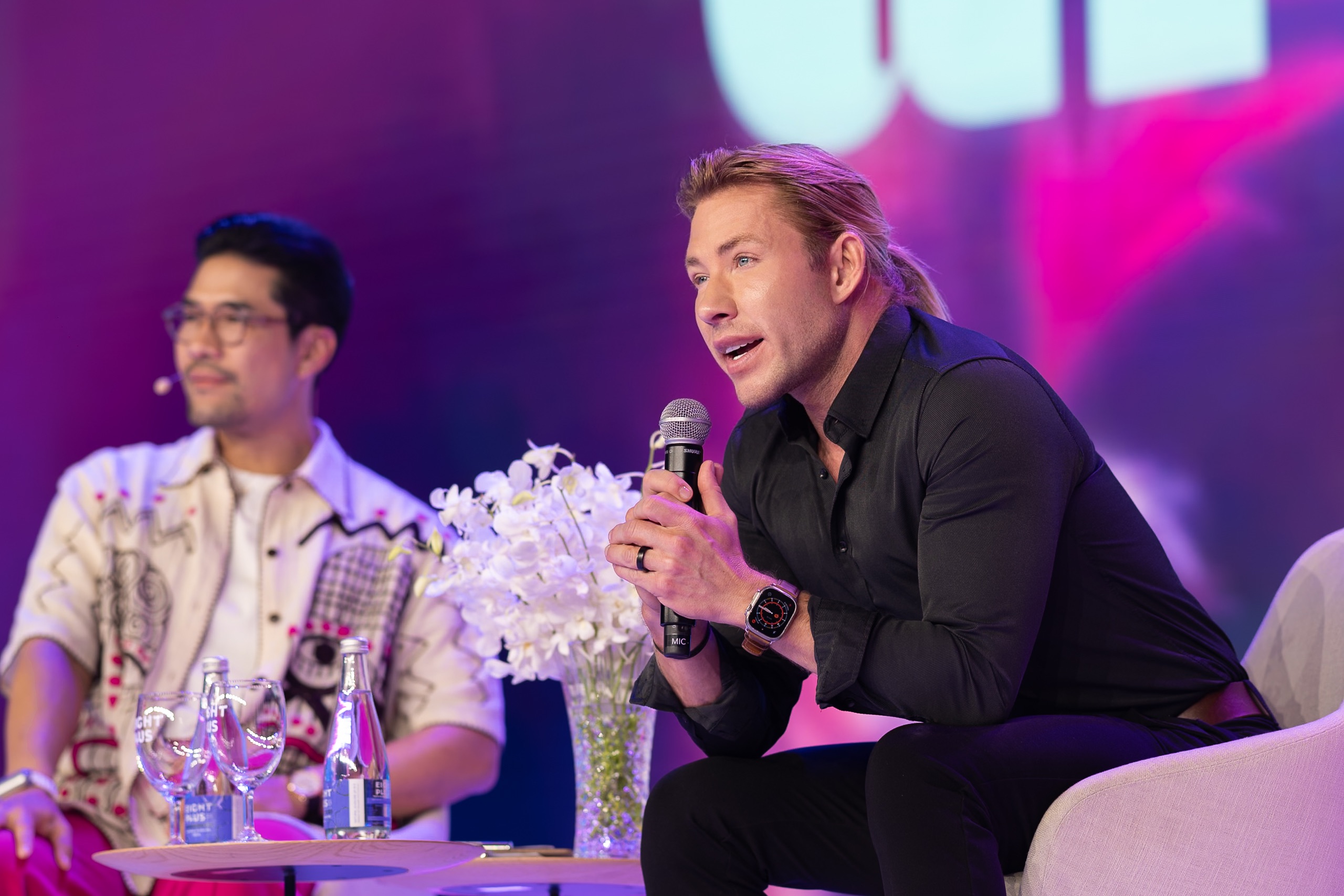

Dr. Matthew Walker

Dr. Matthew Walker

Sleep Diplomat. Professor · author of Why We Sleep.

Academic Home

UT Dallas

Founded & Leads

Somnee Nightfall IQ VIP

Educational Platform

MasterClass

A short version of how I got here

I'm a Professor of Neuroscience and Biomedical Engineering at UT Dallas, where I founded and direct the Sleep Innovation Laboratories at the Center for BrainHealth. My lab studies how sleep shapes human health and disease — from Alzheimer's and cardiovascular illness to depression, anxiety, and metabolic function.

Before Texas, I spent seventeen years at UC Berkeley, and before that I was Professor of Psychiatry at Harvard Medical School. A hundred-plus peer-reviewed papers, funded by the NIH and NSF. The work has always been the same question, asked from different angles: what does sleep actually do, and what happens when it doesn't happen?

Dr. Walker

BSc Neuroscience

Nottingham University, UK

PhD Neurophysiology

Medical Research Council, London

Professor of Psychiatry

Harvard Medical School

Professor of Neuroscience & Psychology

UC Berkeley

Lorri & Todd Platt Professor of Neuroscience & Biomedical Engineering

Sleep Innovation Laboratories, Center for BrainHealth — UT Dallas — Current

100+

Peer-reviewed publications

25M+

TED talk views

4M+

Books sold, 40+ languages

17 yrs

UC Berkeley faculty

Sleep Innovation Laboratories

The lab works across the full translational pipeline — MRI, PET, high-density sleep EEG, genomics, proteomics, autonomic physiology, transcranial stimulation, and cognitive testing — moving from basic neuroscience discovery to clinical intervention and real-world application.

Alzheimer's Depression & Anxiety Cardiovascular Memory & Learning Cancer
Dr. Walker speaking

Why We Sleep

I wrote Why We Sleep with a single goal: to reunite people with the thing their biology depends on most, and knows least about. Published by Scribner and Penguin, translated into more than 40 languages, picked by Bill Gates as one of his top books of the year, and optioned at Sundance for adaptation.

What I didn't expect was how far it would travel — from Olympic training staff to Fortune 500 boardrooms, from neurology wards to dinner-table arguments about bedtime. Sleep turned out to be something almost everyone wanted to talk about, once someone gave them permission.

NYT Bestseller TIME Bestseller Sundance Prize Winner 4M+ Copies Sold 40+ Languages Bill Gates Top 5 Scribner / Penguin
“The best bridge between despair and hope is a good night’s sleep.”

Science Communicator

Most of the research that matters never leaves the journals. I've spent the last decade trying to change that — on stages, on podcasts, in the ear of anyone who'll listen. My TED talk, Sleep Is Your Superpower, has crossed 25 million views on TED.com alone, making it one of the most-watched science talks in TED history.

I've given keynotes at Goldman Sachs, U.S. Special Operations Command, the Society for Neuroscience, Equinox Hotels, and the Center for BrainHealth. My MasterClass on the Science of Better Sleep has reached millions of students worldwide.

Top Appearances by YouTube Views

TED (YouTube + TED.com) 42.3M
Joe Rogan Experience 9.9M
Huberman Lab (9 episodes) 8.4M
Diary of a CEO (2023) 6.7M
MasterClass 6.0M
Modern Wisdom (+ clips) 2.0M
Diary of a CEO (2025) 1.8M
Tim Ferriss Show (+ clips) 418K
Combined reach across all listed appearances 77.6M+ views

YouTube views across all listed appearances (51.7M) plus TED.com plays (25.9M). Clips and shorts included where noted. Figures as of April 2026.

Represented by the Harry Walker Agency. Available for keynotes, corporate workshops, and medical grand rounds on sleep science, performance optimization, and public health.

TED Google Royal Institute The Smithsonian World Economic Forum Royal Society for the Arts

Sleep Technology & Innovation

Two companies. Both are attempts to get laboratory findings past the laboratory door.

Dr. Walker speaking

Co-Founder

Somnee

+22 min additional sleep per night
−28% time to fall asleep
+33 min in clinical insomnia patients

A neurotechnology headband that delivers personalized transcranial alternating current stimulation tuned to each wearer's own brainwaves — enhancing natural sleep architecture rather than overriding it. Developed with Professors Robert Knight and Richard Ivry at UC Berkeley, and published in Frontiers in Human Neuroscience.

Dr. Walker in conversation

Founder & CEO

Nightfall IQ VIP

Private. By introduction.

A concierge practice for a small number of clients each year. The intake is clinical, the analysis is personal, and the consultation is conducted privately by Dr. Walker alongside a board-certified sleep medicine doctor and in conjunction with a certified behavioural sleep medicine clinician, all in accordance with validated clinical protocols.

There is no public tier list. Admissions are by introduction, the details of which the client is welcome to share through direct inquiry, below. Currently the practice is full. At present, waitlist timeline is 7 months.

Inquire → [email protected]

Estee Lauder

Est. 2025

Eight Sleep

Est. 2024

Equinox Hotels

Est. 2025

Published Research

Over 100 peer-reviewed publications in Nature, Neuron, PNAS, Current Biology, and Science Advances. Funded by the NIH and NSF.

Sleep deprivation amplifies amygdala reactivity by roughly 60% and reduces the brain's capacity to form new memories by around 40%.

Deep NREM sleep is associated with a ~20% overnight improvement in motor skill performance, and appears to act as a form of cognitive reserve against Alzheimer's-related memory decline.

A recurring thread in the work is how REM sleep helps the brain separate the content of an emotional memory from the charge that first accompanied it.

Sleep & Memory. How NREM and REM sleep stabilize, integrate, and sometimes reorganize newly learned information into lasting memory.

Emotion & Mental Health. How sleep loss alters amygdala reactivity and prefrontal control, and how REM sleep recalibrates affect overnight — with bearing on anxiety, depression, and PTSD.

Aging & Alzheimer's. Changes in deep NREM oscillations across the lifespan and their relationship to amyloid, tau, and cognitive decline.

Cardiovascular & Metabolism. Links between sleep quality, glucose regulation, and long-term cardiovascular risk.

Inflammation & Immunity. Work with Vallat and Shah on how fragmented sleep elevates inflammatory markers and shapes immune-cell dynamics (PLOS Biology, 2020; Cell Reports Medicine, 2023).

Pain. Work with Krause on how sleep loss amplifies pain sensitivity by disengaging prefrontal cortical regions that normally regulate nociceptive signals (Journal of Neuroscience, 2019).

Appetite, Cravings & Obesity. Work with Greer on how short sleep increases hunger hormones and drives preferences for energy-dense foods (Nature Communications, 2013).

Social Behaviour. How short sleep shapes loneliness, trust, generosity, and helping across individuals and groups.

Sleep & Memory

NREM and REM each play distinct, complementary roles in stabilizing new memories and integrating them into what you already know.

The effect extends to motor learning, declarative recall, and creative problem-solving.

Emotion & Mental Health

Sleep loss amplifies amygdala reactivity and weakens prefrontal control, with direct bearing on anxiety, depression, and PTSD.

REM appears to recalibrate those circuits overnight — separating the content of emotional memories from their charge.

Aging & Alzheimer's

Disrupted deep NREM sleep is associated with beta-amyloid accumulation, and amyloid buildup in turn degrades sleep — a self-reinforcing loop.

Sleep is emerging as both an early biomarker and a possible therapeutic target for neurodegenerative disease.

Cardiovascular & Metabolism

Fragmented and insufficient sleep is associated with arterial stiffening, altered glucose regulation, and elevated cardiovascular risk.

Even modest disruption changes blood-vessel physiology and insulin sensitivity at a mechanistic level.

Inflammation & Immunity

Work with Vallat and Shah showing how fragmented sleep elevates inflammatory markers and shifts the population dynamics of key immune cells.

A mechanistic bridge between poor sleep and the inflammation-driven diseases it tracks alongside.

Pain

Work with Krause showing that sleep loss amplifies pain sensitivity by disengaging prefrontal regions that normally regulate nociceptive signals.

The brain without sleep perceives pain more intensely — a finding with clinical implications for chronic pain management.

Appetite, Cravings & Obesity

Work with Greer showing that short sleep elevates hunger hormones and biases food choice toward high-calorie, energy-dense items.

A plausible contributor to the relationship between chronic short sleep and weight gain.

Social Behaviour

Short sleep is associated with increased loneliness and reduced willingness to help, effects that appear across individuals, groups, and whole societies.

Sleep turns out to be a quietly social phenomenon as well as a personal one.

QQRT

Decades of clinical and experimental research distilled into four measurable dimensions. These are the four macros of good sleep — the metrics that determine whether your sleep is truly restorative.

Q

Quantity

7–9 hrs

The CDC recommends 7–9 hours for adults. Infants need 15–16 hours, children 9–12, and teens 8–10.

Q

Quality

Efficiency

Sleep efficiency — the percentage of time in bed actually spent asleep. Beyond that, the depth and amount of deep NREM sleep and adequate REM cycles.

R

Regularity

±20 min

49% decrease in all-cause mortality, 39% reduction in cancer mortality for the most regular sleepers.

T

Timing

Chronotype

Sleep aligned with your chronotype: Owl (late), Lark (early), or Neutral.

Life

Everything good about my life is a credit to my wife, Nikki Walker-Martz. She is the reason any of this — the work, the writing, the quiet hours at the end of long days — holds together.

We share a home with a 70-lb retired racing greyhound named Ventus, whom I believe to be one of the laziest living creatures on the planet. I track his sleep, naturally — he averages 21.54 hours a day, a statistic I report with equal parts admiration and disbelief.